
10 hotel room design details that can improve the guest experience
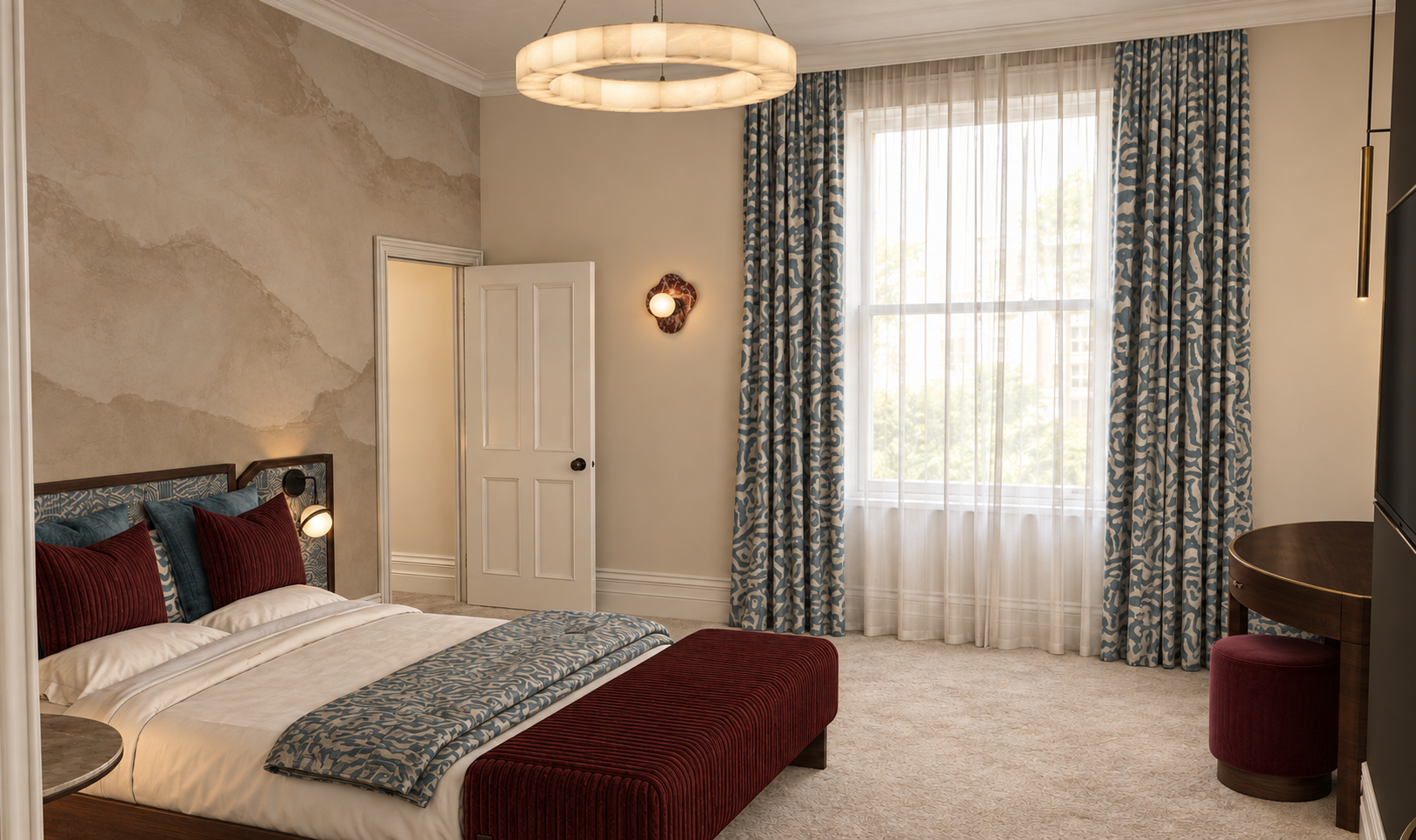
For boutique hotels, a beautifully designed bedroom can help attract attention online.
But once a guest arrives, it is often the smaller, practical design decisions that determine how enjoyable their stay actually feels.
Where can they put their suitcase?
Can they charge their phone beside the bed?
Is there enough light to get ready in the morning?
Can they close the curtains properly at night?
Is there somewhere comfortable to sit other than the bed?
These details may seem relatively small during the design process, but collectively they shape the hotel guest experience. Get them right and a room feels effortless, comfortable and thoughtfully designed. Get them wrong and they can become exactly the details guests remember and potentially mention in their reviews.
For boutique hotel owners and managers considering a refurbishment, here are ten hotel room design details worth giving particular attention.
1. Put power sockets where guests need them
Few guests want to crawl underneath a hotel desk searching for a socket.
Bedside power should be easily accessible and positioned around how the furniture will actually be used. Ideally, guests should be able to charge a phone without moving a bedside table or unplugging a lamp.
USB and USB-C charging can be incorporated alongside conventional UK sockets, while additional charging points at the desk or dressing table accommodate laptops, tablets, hair styling equipment and other devices.
The important point is to coordinate the hotel bedroom electrical design with the furniture layout from the beginning. Positioning sockets before finalising furniture can result in outlets being hidden behind headboards, wardrobes and other fittings.
In a premium hotel room, technology should feel almost invisible: available exactly where it is needed without dominating the design.
2. Give guests somewhere sensible to put their luggage
Luggage storage is one of the most practical aspects of hotel room design, yet it can easily be overlooked.
Without a dedicated location, suitcases inevitably end up on the bed, floor or an occasional chair.
Consider what happens from the moment a guest enters the room.
Is there an obvious luggage bench or rack?
Can a large suitcase be opened comfortably?
Is there room to leave it open without obstructing circulation?
For longer stays, provide sufficient wardrobe and drawer storage so guests have the option to unpack properly.
This is particularly important in smaller boutique hotel bedrooms, where clever space planning can make a relatively compact room feel significantly more comfortable.
3. Create layers of lighting
Lighting can completely change the atmosphere of a hotel bedroom.
A grid of ceiling downlights may provide sufficient general illumination, but it rarely creates the intimate, luxurious atmosphere associated with a memorable boutique hotel.
Instead, think in layers.
Ambient lighting provides the overall background illumination. Decorative pendants and wall lights contribute character, while bedside reading lights provide focused task lighting. Concealed LEDs can highlight bespoke joinery or architectural details, and a good desk or dressing-table light provides practical illumination.
Guests should also be able to control these layers intuitively.
At bedtime, nobody wants to walk around an unfamiliar room switching off six different lamps individually. Consider master controls close to the bed while still allowing guests to adjust specific lights to suit their preferences.
Good hotel lighting design needs to balance atmosphere, functionality and simplicity.
4. Make the bed the visual hero of the room
The bed is usually the largest piece of furniture in a hotel bedroom and naturally becomes its focal point.
Use that to your advantage.
An upholstered headboard, feature wall, wallcovering, bespoke joinery or carefully positioned lighting can create a strong visual composition around the bed.
This matters for another reason: hotel rooms need to photograph well.
Before guests experience a room physically, many will first encounter it through the hotel's website, social media or an online booking platform. A strong focal point gives photographers a natural hero shot and helps the room communicate its character immediately.
For boutique hotels in particular, this is an opportunity to move away from the anonymous appearance of a generic hotel bedroom and create something recognisable.
5. Don't underestimate the importance of blackout curtains
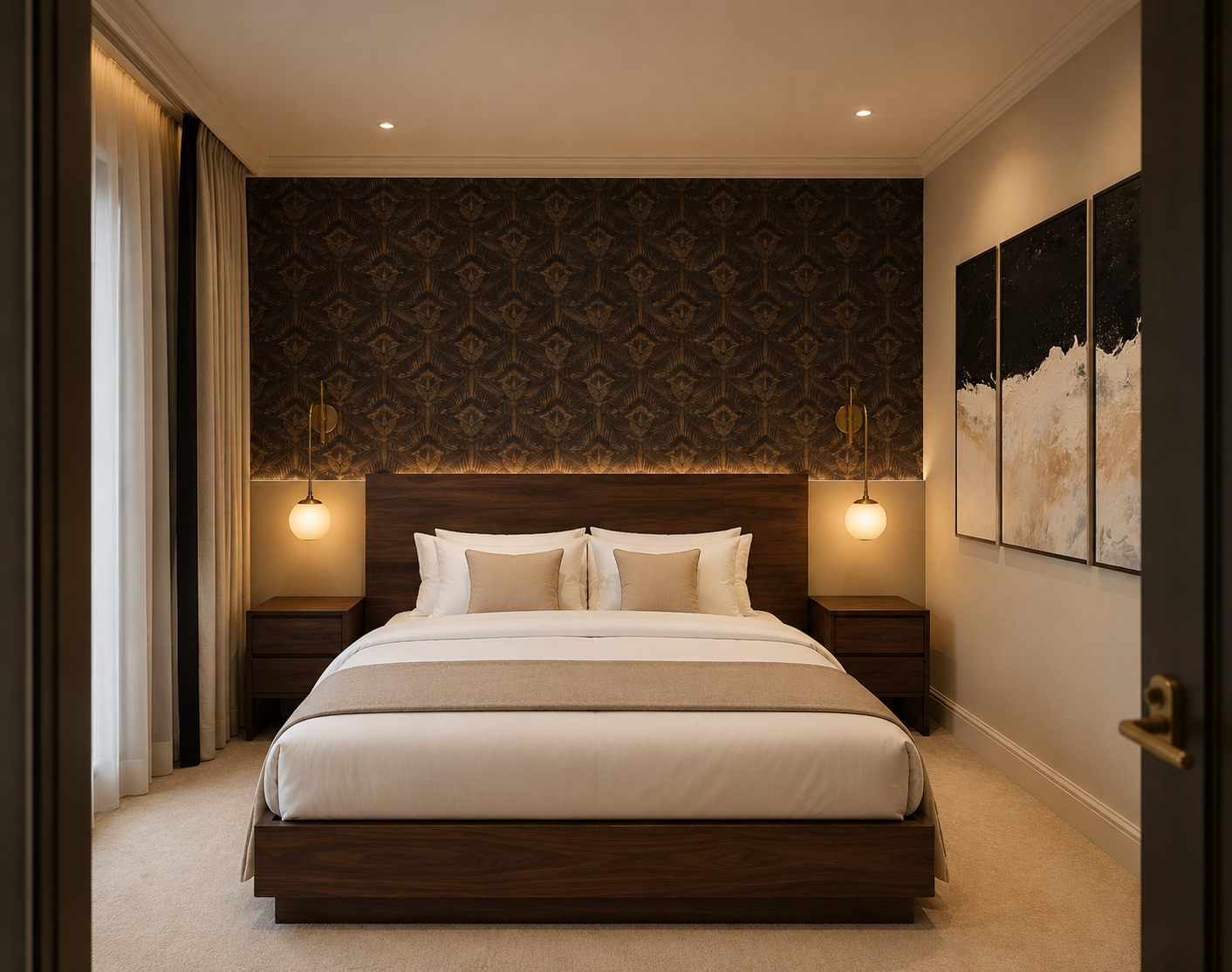
Beautiful window treatments contribute enormously to the appearance of a hotel bedroom, but they also perform an essential practical function.
Guests need privacy and, perhaps more importantly, the ability to make the room properly dark.
Blackout curtains should close easily and minimise gaps that allow early morning light into the room. Floor-to-ceiling curtains can also make windows appear larger, soften acoustics and introduce another layer of texture.
Layering sheer curtains with heavier blackout curtains provides greater flexibility during the day. Guests can maintain privacy while still benefiting from natural daylight.
Where possible, consider the curtain design as part of the architecture of the room rather than treating it as a decorative addition at the end.
6. Provide somewhere comfortable to sit
A hotel room should offer more than somewhere to sleep. Depending on the room category and available floor area, consider including an armchair, small sofa, window seat or comfortable desk chair.
Think about different guests and how they might use the room.
A business traveller may want to answer emails somewhere other than the bed. A couple may want to sit together with a drink before dinner. Someone staying for several nights may simply want to sit and read comfortably.
In larger rooms and suites, creating distinct zones for sleeping, working, dressing and relaxing can significantly improve the sense of space and make the accommodation feel more residential.
This can be particularly effective within luxury and boutique hotel interior design, where guests increasingly expect their room to provide an experience rather than simply a bed for the night.
7. Design the bathroom around the guest's routine
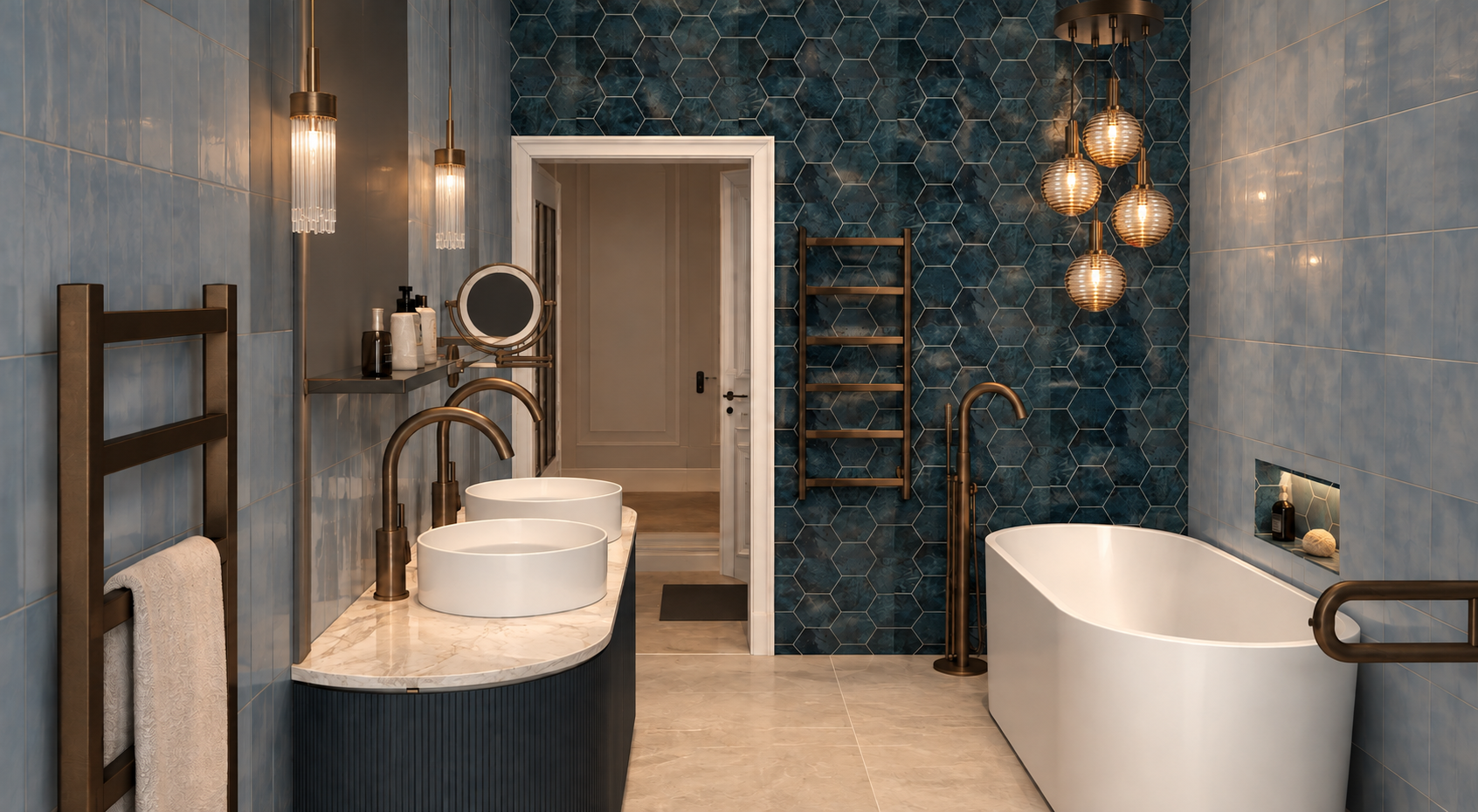
Hotel bathrooms have considerable influence over how guests perceive the quality of their stay. Start with practical questions.
Where does someone put their washbag?
Is there enough space around the basin?
Is the mirror well lit?
Can two people get ready comfortably?
Is there somewhere within reach of the shower for toiletries?
Where do towels go after use?
Good bathroom lighting is especially important. Guests need flattering ambient light alongside sufficient illumination around the mirror for shaving, applying make-up and other grooming.
Storage doesn't necessarily need to be extensive, but useful surfaces do matter.
A visually impressive bathroom can make a fantastic photograph, but the best hotel bathroom design combines that visual impact with effortless everyday usability.
8. Make controls and technology intuitive
Smart hotel technology can improve the guest experience, but only when guests understand how to use it.
Lighting controls, air conditioning, blinds, televisions and audio systems should be intuitive without requiring lengthy instructions.
The temptation with a luxury hotel room can be to add more technology to increase the perception of sophistication. In reality, technology that causes frustration can have the opposite effect.
Ask a simple question during the design process:
Could someone who has never entered this room before understand how everything works within a few minutes?
If not, simplify it.
Technology should support comfort rather than becoming an obstacle to it.
9. Consider acoustics
Guests may notice beautiful wallpaper and furniture when they enter a room, but at 2am they are much more likely to notice noise.
Not every acoustic issue can be solved through interior design alone, but the materials within the room can contribute to a more comfortable acoustic environment.
Carpets, rugs, upholstered furniture, curtains, padded headboards and acoustic wall panels can all help absorb sound.
The location of televisions, adjoining doors, lifts, plant equipment and circulation routes should also be considered during space planning wherever possible.
For boutique hotels occupying historic or converted buildings, this can be especially important. Existing architecture may create constraints, making early consideration of acoustics particularly valuable.
A room that feels quiet and calm supports one of the most fundamental requirements of any hotel stay: a good night's sleep.
10. Create memorable details without sacrificing practicality
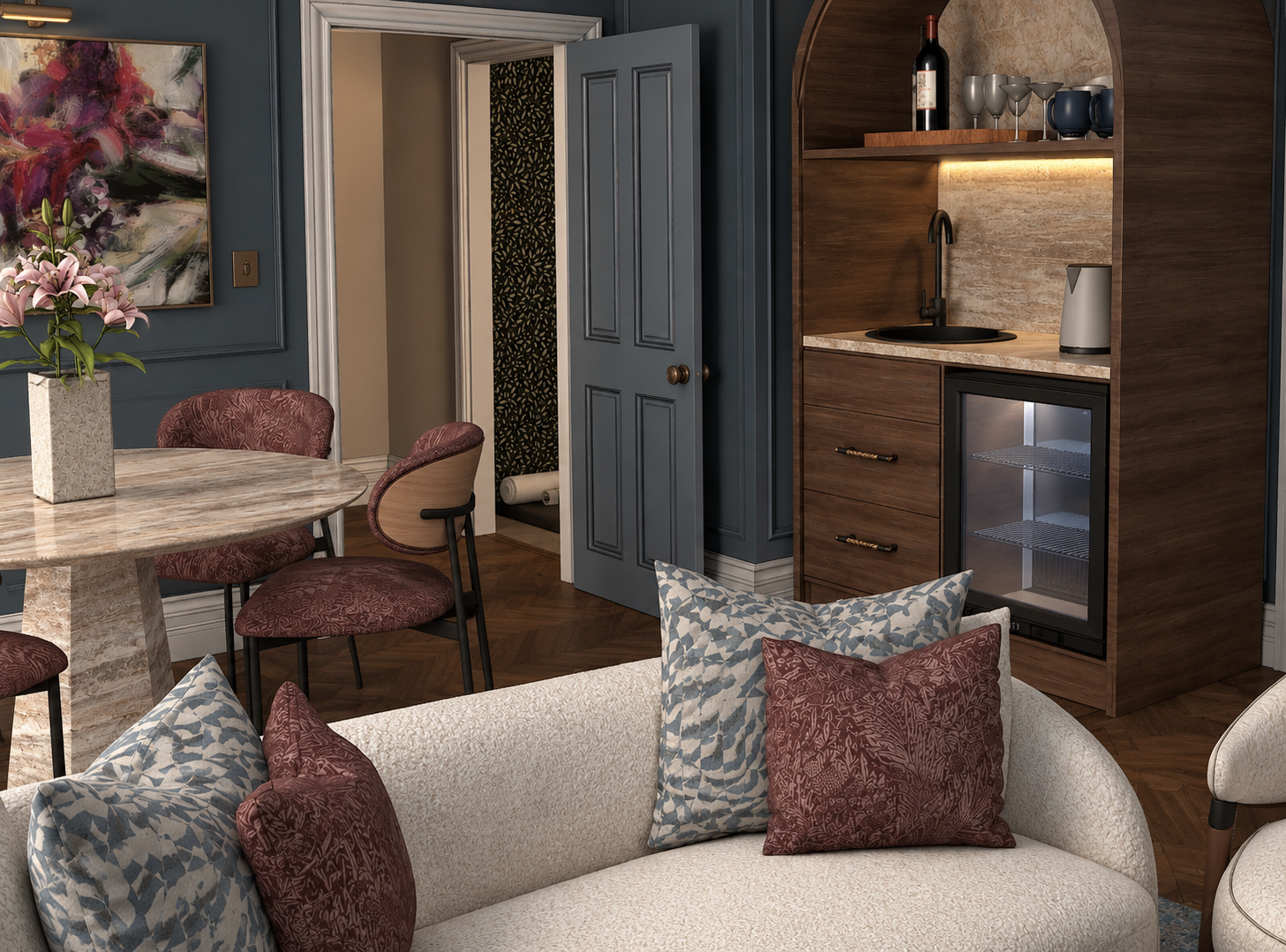
Finally, give guests something to remember. Boutique hotels have an opportunity that larger standardised hotel brands don't always possess: the ability to develop a distinctive identity.
That could come through bespoke furniture, unusual artwork, locally inspired materials, a signature colour palette, beautifully designed lighting or subtle references to the history of the building and its surroundings.
The strongest hotel concepts carry that identity through multiple touchpoints rather than relying on one dramatic feature.
Artwork, stationery, toiletries, robes, cushions, menus and other guest items can reinforce the wider interior concept.
The key is restraint.
Guests shouldn't feel as though they have walked into a themed attraction. Instead, these details should create a subtle sense of place and a room that couldn't simply belong to another hotel.
That individuality also provides more opportunities for distinctive photography, social sharing and memorable guest experiences.
Good hotel design considers the entire guest journey
Successful hotel interior design is about more than choosing attractive furniture, colours and finishes.
It means considering what guests see before they book, how they feel when they first enter the room, how easily they can use the space, how comfortably they sleep and what they remember afterwards.
It is also worth experiencing a proposed room from the guest's perspective.
Imagine arriving with a suitcase after a long journey. Walk through where you would put your belongings, charge your phone, make a drink, work, shower, get ready, relax and eventually go to sleep.
That exercise can reveal surprisingly small design problems before they become real guest frustrations.
Better guest experience can support better reviews
Guests rarely leave positive reviews because a power socket was positioned correctly. But they certainly notice when it isn't. This is what makes thoughtful hotel room design so important.
Numerous small decisions combine to create an experience that feels easy and considered. Guests may not consciously identify every successful design detail, but collectively those details influence their perception of comfort, quality and value.
For boutique hotel owners planning a refurbishment, it therefore makes sense to look beyond how a room will appear on completion.
Ask how it will photograph, function and feel.
Because ultimately, the most successful hotel interiors need to do all three.
At Ellipsa, we design interiors with both the guest experience and the commercial objectives of the property in mind. From space planning and interior concepts to detailed design, 3D visualisation and guest-facing spaces, thoughtful interior design can help boutique hotels create distinctive environments that guests want to experience and remember. Contact Ellie to arrange a discussion about your interior design upgrade plans.
