
Styling shelves and surfaces for a luxurious look
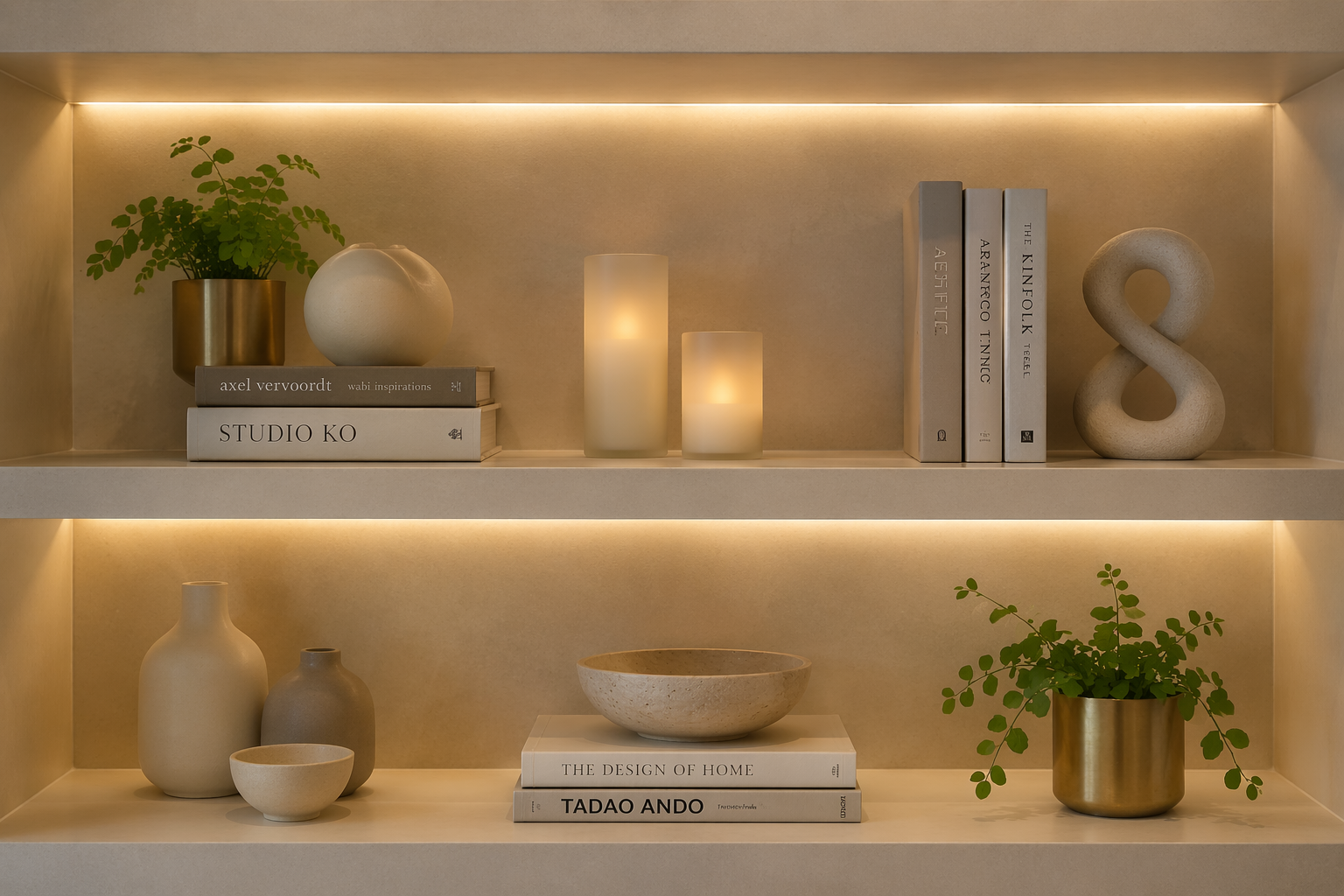
Shelves and surfaces are often where a home either feels considered or unintentionally cluttered. When styled well, they become a quiet expression of personal identity, reinforcing the overall design rather than distracting from it.
For a high-end result, styling should feel curated, not decorated. Each item should appear intentional, relevant, and balanced within the space.
Start with a clear intention
Before placing a single object, define the purpose of the surface. Is it to display meaningful pieces, to soften architectural joinery, or to add visual depth to a room?
High-end interiors avoid filling space for the sake of it. Instead, they edit carefully. A smaller number of well-chosen objects will always feel more refined than an abundance of items competing for attention.
Curate with personal relevance
A luxurious interior is not impersonal. It reflects the homeowner’s experiences and interests in a subtle, elevated way.
This might include:
A small framed artwork collected while travelling
A sculptural object with a story behind it
Books that reflect genuine interests, not just colour
Handcrafted ceramics or materials with tactile appeal
The key is restraint. These items should be integrated into the overall scheme, not stand apart from it.
Balance through creating shapes
Styling is not random placement. It is a composition.
Objects should be arranged to create visual shapes, often triangular or stepped, using variation in height and scale. For example, a taller object might anchor one side, balanced by a grouping of smaller pieces on the other.
Symmetry can create a formal, architectural feel, while asymmetry introduces softness and movement. Both approaches can feel high-end when executed with control.
Allow for white space
One of the most overlooked principles is restraint.
White space, or negative space, allows objects to breathe. It gives each piece importance and prevents visual overwhelm.
Avoid filling every shelf or surface. Leaving sections intentionally empty creates contrast and emphasises what has been placed.
A well-styled shelf often feels slightly underfilled, rather than complete.
Group by colour or material
Grouping objects by colour or material creates cohesion.
A tonal approach, such as layering creams, taupes, and soft browns, produces a calm, refined aesthetic. Alternatively, grouping by material, such as glass, ceramic, or stone, introduces texture while maintaining order.
Avoid overly contrasting combinations. High-end styling tends to favour subtle transitions rather than sharp visual breaks.
Layering for depth and interest
Flat, single-layer arrangements can feel static.
Layering introduces depth. This might involve placing a smaller object slightly in front of a larger one, leaning artwork behind objects, or stacking books horizontally with an object placed on top.
This creates a sense of dimension and softness, avoiding a rigid or overly staged appearance.
Consider proportion and scale
Objects should relate to both the shelf and the wider room.
Oversized items can feel heavy if not balanced, while very small items can appear insignificant when isolated. Grouping smaller objects together can help them hold presence.
Varying scale within a composition creates rhythm, but it should always feel intentional and controlled.
Introduce subtle contrast
While cohesion is important, a small degree of contrast adds interest.
This could be achieved through:
A darker object within a light palette
A polished finish against a matte background
A curved form alongside more linear elements
The contrast should feel deliberate, not disruptive.
Lighting to enhance atmosphere
Lighting transforms how shelves are perceived, particularly in the evening.
Integrated LED strips within joinery can softly highlight objects, adding depth and warmth. A warm colour temperature is essential to maintain a calm, inviting atmosphere.
Alternatively, discreet uplighters or table lamps positioned near shelving can create gentle pools of light, enhancing texture and materiality.
Lighting should never feel harsh or overly bright. It is there to support the mood of the space.
Edit, then edit again
The final step is refinement.
After styling, step back and remove at least one or two items. High-end interiors are defined as much by what is omitted as what is included.
If an object does not contribute to the overall composition, it should not remain.
A quiet expression of considered living
Styling shelves and surfaces is not about filling space. It is about composing it.
By balancing personal relevance with restraint, layering with intention, and using light to enhance the result, shelves can become a subtle but powerful element of a calm, luxurious home.
When approached thoughtfully, even the smallest surface can reinforce a sense of quality, clarity, and ease.
