
Sustainable hotel guest room interior design
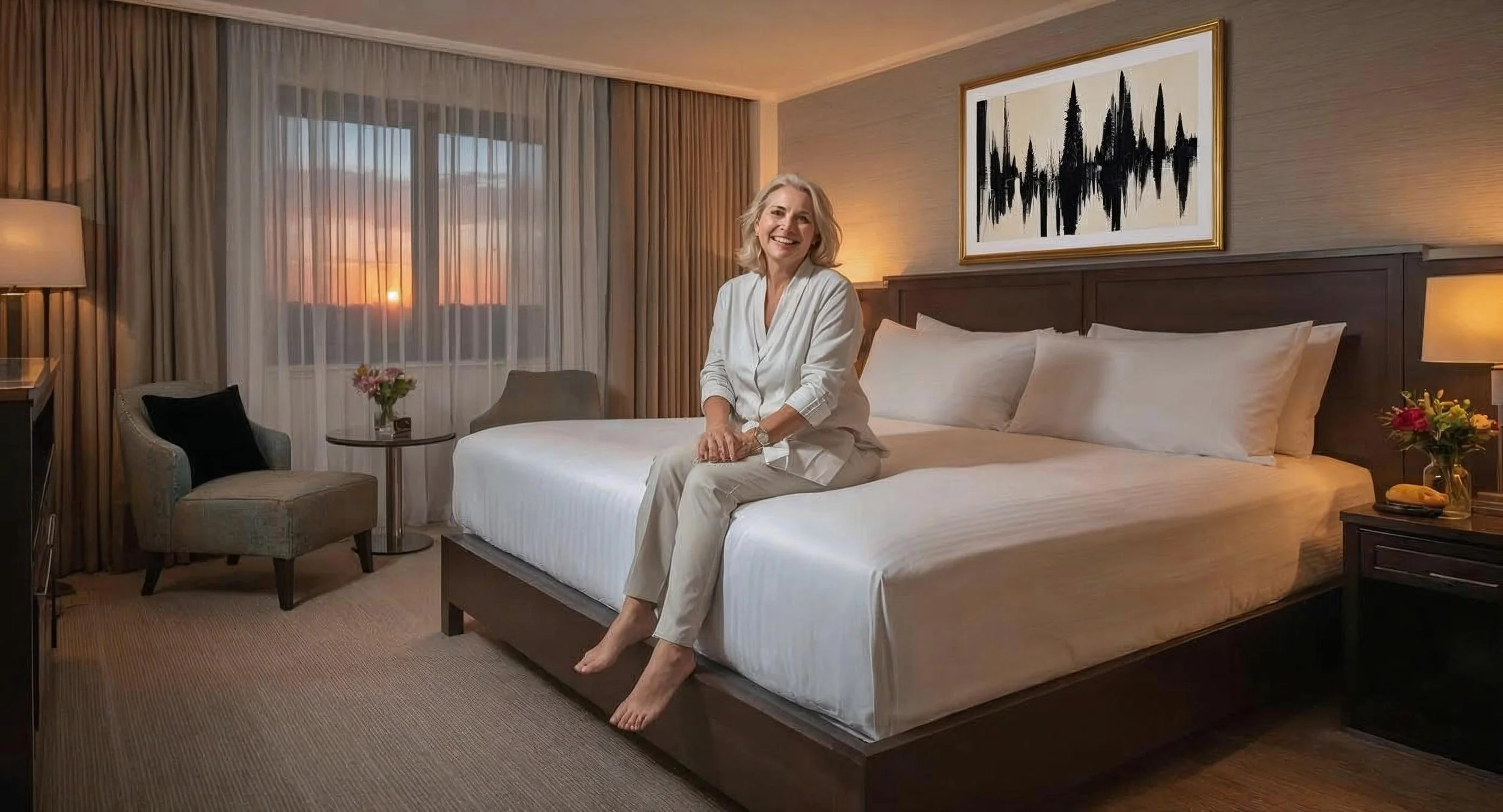
Designing refined spaces that perform, for guests, hotel owners, managers, and the environment.
Sustainability in hospitality is no longer a differentiator, it is an expectation.
For boutique hotel owners and developers across West Yorkshire and beyond, the challenge lies in creating guest rooms that feel luxurious, timeless, and deeply comfortable, while quietly delivering measurable environmental performance.
Ellipsa approaches sustainability not as a visual trend, but as a layered design strategy. One that considers materials, longevity, operational efficiency, and guest experience in equal measure.
Below, we explore the key components of a truly sustainable hotel guest room.
1. Designing for longevity, not replacement
The most sustainable interior is one that doesn’t need to be replaced.
Lifecycle-led interior design strategy
Short lifecycle design, driven by trends or poor specification, leads to repeated refurbishment cycles, increased waste, and higher long-term costs.
Timeless vs trend-led interiors
In contrast, a well-designed guest room should remain relevant and durable for 8–12 years or more.
Key principles:
Timeless, neutral base palettes (warm stone, muted greens, soft clays)
Layered textures rather than trend-led statement finishes
Robust detailing (solid timber edges, reinforced joinery, contract-grade fixings)
Modular elements that allow partial upgrades rather than full replacements
This approach reduces both embodied carbon and operational disruption, a critical factor for revenue-driven hospitality environments.
2. Sustainable material specification
Material selection has one of the greatest environmental impacts within a hotel interior. The focus should be on low embodied carbon, responsible sourcing, and long-term durability.
Recommended material strategies:
Timber & Joinery
FSC or PEFC certified timber
Engineered boards with low formaldehyde emissions (E1/E0 rated)
Veneers over solid hardwood where appropriate to reduce resource use
Surface finishes & paints
Natural stone alternatives with recycled content (e.g. composite surfaces)
Clay-based or lime plasters for breathable wall finishes, especially in heritage properties
Low-VOC paints to maintain indoor air quality
Textiles & upholstery
Organic cotton, wool, and linen blends
Recycled polyester for durability in high-traffic upholstery
Solution-dyed fabrics (reduced water and chemical use during production)
Flooring solutions
FSC-certified engineered timber
LVT with verified environmental product declarations (EPDs)
Natural options such as cork or linoleum in appropriate areas
A considered palette of materials not only reduces environmental impact but enhances tactile quality, something guests subconsciously associate with luxury.
3. Sustainable furnishings & FF&E strategy
Furniture, fixtures, and equipment (FF&E) are often overlooked in sustainability conversations, yet they represent a significant portion of embodied carbon.
A more responsible FF&E approach includes:
Designing bespoke joinery sized precisely to the space (reducing offcuts and waste)
Selecting contract-grade furniture with replaceable components (e.g. re-upholsterable seating)
Working with UK manufacturers to reduce transport emissions
Avoiding composite materials that cannot be recycled at end of life
Key consideration:
A £600 chair replaced every 3 years is far less sustainable than a £1,200 chair lasting 10 years.
We advise clients to view FF&E not as a cost line, but as a lifecycle investment.
4. Energy-efficient heating & climate control
Heating systems are one of the largest contributors to operational energy use in hotels. The goal is to provide responsive comfort with minimal energy waste.
Most reliable and efficient solutions include:
Air source heat pumps
Highly efficient (typically 3 to 4 times more efficient than traditional electric heating)
Ideal for consistent background heating
Lower carbon when paired with renewable electricity sources
Electric panel heaters with smart controls
Suitable for retrofit scenarios
Zoned heating reduces energy waste in unoccupied rooms
Integrates with occupancy sensors and hotel management systems
Underfloor heating (wet or electric)
Even heat distribution and improved comfort perception
Allows lower operating temperatures
Works particularly well in bathrooms
Smart heating controls
Key-card or occupancy-based systems to prevent heating/cooling in empty rooms
Integration with central BMS (Building Management Systems)
Guest-adjustable within controlled parameters
The most effective strategy often combines systems, for example, underfloor heating in bathrooms with air source heat pump-fed radiators or fan coils in sleeping areas.
5. Water efficiency & smart use
Water consumption is a major operational cost in hospitality, and a critical sustainability metric.
High-performance, guest-friendly solutions include:
Low-flow fixtures
Aerated taps and showerheads (reducing water use by up to 50% without compromising pressure)
Flow rates typically 5–8 litres/minute for showers
Thermostatic mixing valves (TMVs)
Precise temperature control
Reduced water waste while adjusting temperature
Dual-flush WCs
4 and 2.6 litre or similar high-efficiency systems
Leak detection & smart monitoring
Real-time monitoring of water usage
Alerts for abnormal consumption or leaks
Greywater reuse (where feasible)
Reuse of shower or basin water for WC flushing
More viable in new-build or large-scale refurbishments
Crucially, these solutions should be invisible to the guest experience, sustainability should never feel like compromise.
Designing a hotel project?
Download our Sustainable Hotel Room Checklist to avoid costly design mistakes.
6. Lighting design for energy reduction
Lighting plays a dual role: enhancing atmosphere while significantly impacting energy consumption.
Best practice approach:
LED lighting throughout (with high CRI for colour accuracy)
Layered lighting schemes (ambient, task, accent) to reduce over-lighting
Motion sensors in circulation areas and bathrooms
Dimmable systems to allow mood control and energy savings
Maximising natural daylight through layout and window treatments
Well-designed lighting reduces energy use while elevating perceived luxury, a key balance in boutique hospitality.
7. Indoor air quality & guest wellbeing
A truly sustainable guest room supports not only the environment but also the wellbeing of its occupants.
Design considerations:
Low-VOC materials and adhesives
Breathable finishes to prevent condensation and mould
Mechanical ventilation with heat recovery (MVHR) where possible
Use of natural materials to regulate humidity
Guests may not consciously identify these elements, but they will feel the difference in comfort, sleep quality, and overall experience.
8. Designing for measurable impact
Sustainability is most powerful when it is measurable.
For hotel operators, this means:
Reduced energy bills
Lower maintenance and replacement costs
Improved ESG credentials
Stronger appeal to environmentally conscious guests
Frameworks that certify hotels like yours, such as BREEAM or WELL can support you in setting up what’s required to measure the improvements. But even without formal certification, a well-considered design strategy delivers tangible returns every time.
Conclusion: Sustainable design as a commercial advantage
Sustainable hotel guest room design is not about restriction, it is about precision.
When executed properly, it results in:
Longer-lasting interiors
Lower operational costs
Enhanced guest comfort
A stronger, future-ready brand position
Ellipsa designs guest environments that are as intelligent as they are refined, balancing material integrity, operational performance, and timeless aesthetic appeal.
Considering a hotel refurbishment or new development?
Ellipsa works with boutique hotel owners and developers across West Yorkshire to create guest rooms that deliver long-term value, both commercially and environmentally.
Get in touch to discuss your project, or explore more insights in the Journal.
